


Ole Miss entered the College Football Playoff surrounded by uncertainty. The Rebels were playing their first CFP game in program history, facing a confident Tulane team riding a historic season, and doing it all without Lane Kiffin, who departed the program just weeks earlier.
What followed Saturday night in Oxford wasn’t uncertainty at all.
Instead, Ole Miss delivered one of the most complete performances of the opening playoff round, overwhelming Tulane 41–10 in a game that was effectively decided before halftime. The Rebels played fast, physical, and composed—sending a clear message that this team is far more than a product of its former head coach.
A Charged Atmosphere, a Clear Mission
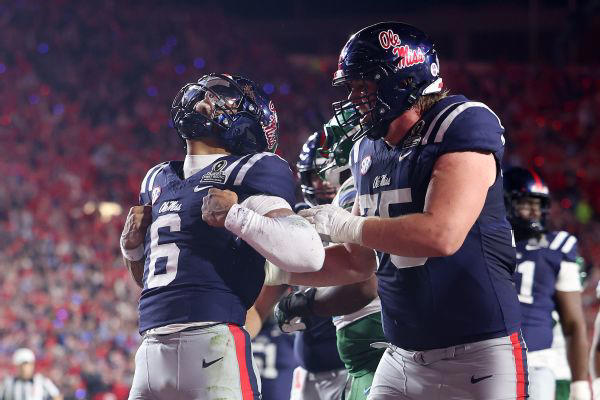
From the moment kickoff arrived at Vaught-Hemingway Stadium, the environment felt different. The crowd was loud, engaged, and unmistakably aware of what was at stake—not just a playoff win, but validation.
Ole Miss responded immediately.
After winning the opening kickoff, the Rebels wasted no time asserting control. On their first possession, the offense attacked vertically, stretching Tulane’s defense and forcing it to defend every blade of grass. Just three plays and 59 seconds into the game, Ole Miss was in the end zone, capped by a 20-yard touchdown run by Kewan Lacy.
It was the perfect opening statement: aggressive, confident, and decisive.
Early Turnovers Tilt the Game
Tulane entered the playoff known for its explosive offense and resilience, but the margin for error against an SEC opponent on the road was always thin. That margin disappeared quickly.
On Tulane’s first meaningful possession, quarterback Jake Retzlaff forced a throw into coverage and was intercepted by Jaylon Braxton, a momentum-swinging play that flipped the field and energized the Ole Miss sideline.
The Rebels capitalized.
That turnover set up another short scoring drive, and suddenly Ole Miss was up multiple scores with complete control of tempo. The Rebels didn’t just score—they dictated pace, controlled field position, and forced Tulane into obvious passing situations far earlier than planned.
By the end of the first quarter, it was clear Ole Miss had seized command of the game.
Trinidad Chambliss Delivers on the Biggest Stage
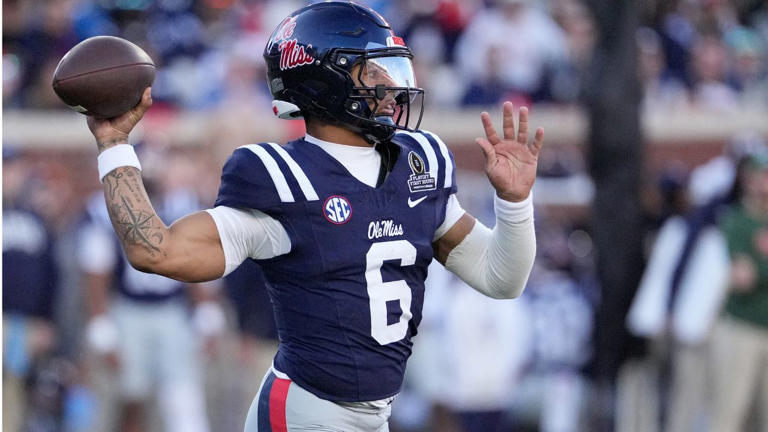
Quarterback Trinidad Chambliss entered the CFP with expectations and pressure, but his performance Saturday looked anything but overwhelmed.
Chambliss was composed, efficient, and decisive. He consistently made the right read, protected the football, and punished Tulane when coverage broke down. Whether it was stepping up in the pocket, extending plays with his legs, or hitting receivers in stride, Chambliss played like a quarterback fully in control.
By the final whistle, he accounted for over 300 yards of total offense and three total touchdowns, delivering the type of performance that defines playoff moments.
Just as important, he never forced the game. Ole Miss’s offense remained balanced, unpredictable, and patient—allowing Chambliss to operate within structure rather than chasing hero plays.
Ole Miss Wins the Line of Scrimmage
One of the quiet but decisive factors in the game was Ole Miss’s dominance up front.
Offensively, the Rebels’ line consistently opened lanes in the run game and gave Chambliss clean pockets to throw from. Defensively, Ole Miss pressured Retzlaff without selling out, collapsing the pocket and limiting explosive plays.
Tulane finished with respectable yardage totals, but much of it came after the game was already out of reach. In critical moments—third downs, red zone possessions, early drives—Ole Miss’s defense held firm.
The Rebels forced Tulane to be one-dimensional, then punished them for it.
A Seamless Transition Without Lane Kiffin
The storyline entering the game revolved around Lane Kiffin’s departure and whether Ole Miss could maintain its identity without him. That question was answered emphatically.
Interim head coach Pete Golding kept the operation steady. There were no visible signs of confusion, no conservative play-calling, and no emotional letdowns. Ole Miss played with clarity and purpose, suggesting a program that had fully bought into continuity rather than disruption.
Golding leaned on preparation, trusted his staff, and allowed the players to lead. The result was a team that looked unified and focused rather than distracted by outside noise.
For a program navigating change at the most critical point of the season, that mattered.
Tulane’s Season Ends, But Its Legacy Remains
For Tulane, the night was difficult—but it doesn’t erase what the Green Wave accomplished.
This was Tulane’s first College Football Playoff appearance, the result of an AAC championship season and consistent excellence throughout the year. Against Ole Miss, Tulane continued to compete, finishing with more than 400 total yards of offense, but early mistakes proved too costly.
Turnovers, missed opportunities, and defensive breakdowns in the opening quarter created a deficit that was impossible to overcome in a hostile environment.
Despite the loss, Tulane’s season stands as one of the most significant in program history—a reminder that Group of Five programs can still reach the sport’s biggest stage.
Pulling Away in the Second Half
If there was any doubt left at halftime, Ole Miss erased it quickly.
The Rebels opened the second half with the same intensity they showed early, adding to their lead with methodical drives and defensive stops. The offense remained balanced, mixing the run and pass effectively, while the defense continued to force Tulane into uncomfortable situations.
By the fourth quarter, Ole Miss was firmly in control, rotating players and closing the game with authority. The final score—41–10—accurately reflected the gap on the field.
What the Win Means Going Forward

With the victory, Ole Miss improved to 12–1 and advanced to the Sugar Bowl quarterfinal, where a much stiffer challenge awaits in No. 2 Georgia.
That matchup will test everything Ole Miss believes about itself—its physicality, depth, and ability to execute against an elite defense. But after Saturday’s performance, the Rebels have every reason to believe they belong.
This wasn’t just a win. It was proof of concept.
Ole Miss showed it can thrive under pressure, adapt through change, and deliver on the sport’s biggest stage.
Final Thoughts
Ole Miss’s first College Football Playoff appearance could have been defined by nerves, coaching uncertainty, or missed opportunities. Instead, it became a showcase of discipline, balance, and confidence.
Without Lane Kiffin, the Rebels didn’t flinch.
Against a worthy opponent, they didn’t hesitate.
In their biggest moment, they delivered.
Now, the spotlight only grows brighter.
